
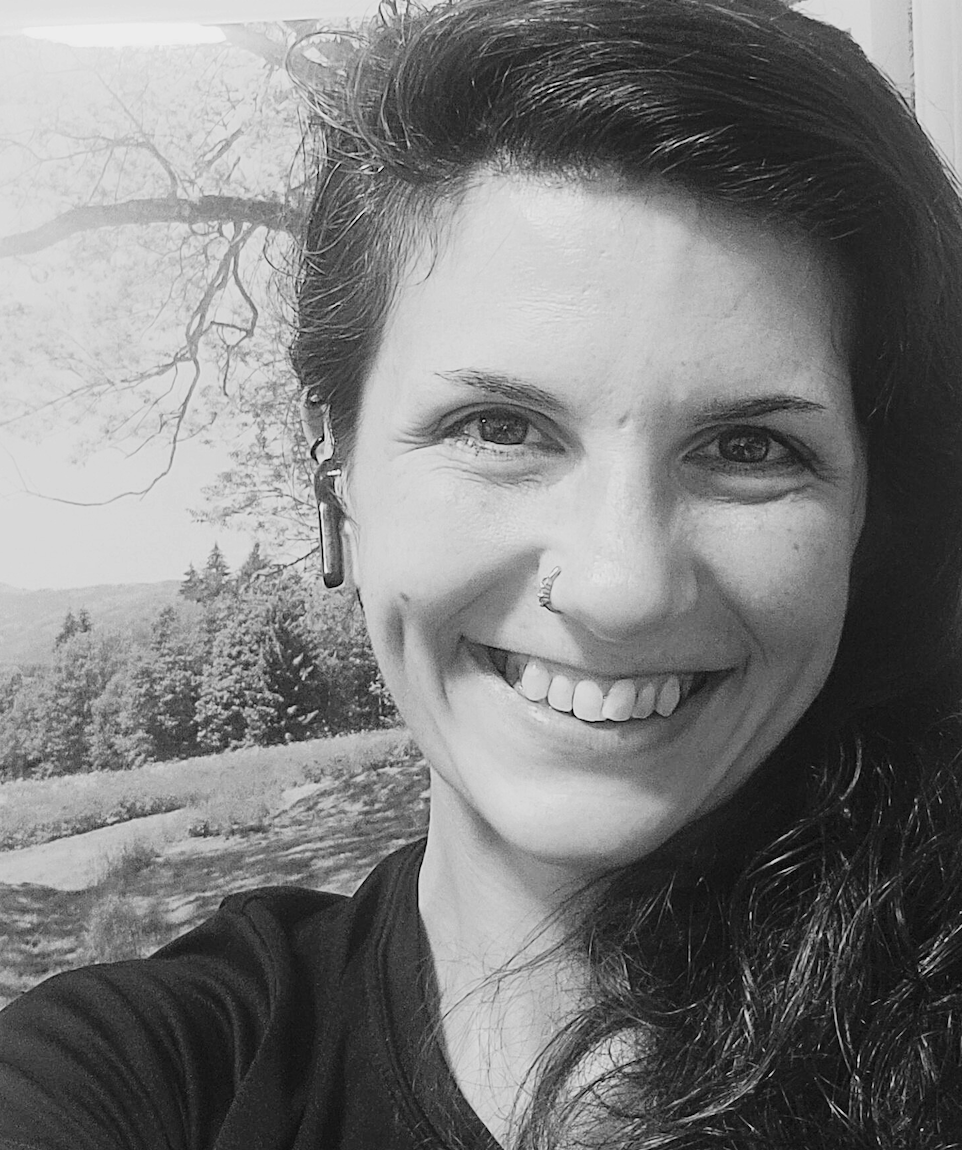

Via Community News Service, in partnership with Vermont State University Castleton
Paul Suk-Hyun Yoon is chief diversity officer at Vermont State University. He says his purpose in life is to pursue justice, and he has more than 18 years of experience in education with degrees from Boston College, Harvard Graduate School and pursuing another at the University of Vermont. His most recent position was as senior advisor for inclusive excellence at the University of Vermont. Yoon hails from Manhattan and after many different moves settled in Essex in 2013, where he lives with his wife, Jenny, and their two children.
Q. In light of new executive orders, how did you feel about the president and his issued order that there are only two genders?
A. Lots of words come up. I think the first one that comes to mind is disappointed. Another one is confusing. Another one is feeling like we as a country had taken a step back in a significant way, and there’s much more than just those.
Q. How do you feel about the elimination of DEI workers on a federal level, and how do you think that will impact school institutions and professors and students alike?
A. I personally feel sad, and I personally feel really an incredible amount of empathy towards the individuals and the offices that were involved with that specific action, and the cascading impact that’s also happening on other institutions as well. For me, I think one of the things that’s going to be really important to keep in mind with not only that executive action, but with many of the other ones, is the human component of it. These are our friends, they’re our neighbors, they’re our family members. They are our fellow citizens who are being impacted in this way.
Q: It was temporarily halted, but there was a freeze on federal assistance for schooling. Did that worry you at all?
A: What was, I think, particularly jarring about that was it wasn’t right. It didn’t just impact institutions of higher education. It was trillions of dollars of federal funds; they tried to shut that off, kind of in one fell swoop. And I heard stories about people who rely on Medicaid, for example, for procedures or reimbursements or whatever it might be, to people who are working for the United States Department of Agriculture who are helping farmers … Like it really just ran the gamut of all of these different places, and there was an immense amount of fear and panic, not only from our institution but institutions all across the country. For some people, the very real consequence was, ‘Am I going to continue to be employed?’
Q. Did you have any fears for your own your family when the new administration took over?
A. I’m Korean-American. My wife is white, and our two children are obviously half Asian-American and half white. Our son, who is 14, is in eighth grade, and leading up to the election, there had been a number of different things that were said to him. He’s obviously a mix of both Asian and white, and in some kind of way, or in some kind of light, some people just kind of think of him as being part of the normal group of students. And in other ways, I think he stands out because of his name, right? He’s really proud of being a Korean-American in some ways. But leading up to the election, there were several students who were saying things like, “Once Trump gets elected,” or, “if Trump gets elected, you’re screwed, because you are Asian or Asian-American.” And a lot of people were saying things and not making the distinction between being Korean-American and Chinese. It was all kind of just clumped together after the election. I’m absolutely concerned about the potential for anti-Asian rhetoric to kind of ramp up again.
Q. I read that you enjoy running. Is that still something you like to do and what exactly does it do for you?
A. Absolutely, I love it. I’m an amateur triathlete, so running, obviously, is a big part of that sport, but it’s also, for me, a part of what I can do to be a healthy human and to find that balance. There’s obviously a lot of stress in the job, and so for me, I like running, biking, swimming, but strength training is also something I do regularly. And I’m really, really grateful for a group of people that I meet up with. A lot of people think we’re crazy, but we meet up at 5:30 a.m. Tuesdays and Thursdays outside all year round, and we exercise together.
Q. Are there any qualities that you have inherited or that you take through your own life and your own personal experiences?
A. One thing that I have been so grateful for throughout my life is the unconditional love and empathy …really the cultivation of the potential that people have seen in me since I was in middle school and even before that. Since middle school I’ve had several different people really continuing to encourage me to work hard, to study to the best of my ability, and eventually, kind of the big turn, if you will, was after this course that I took as an undergraduate student titled the History and Development of Racism in the United States of America, where the encouragement was to think about how I could leverage my strengths, my skills, to really help make the world a better place.
Q. You had mentioned in a previous interview the four “isms.” How do you think, narrowly speaking as an institution, we’re doing on those, and then more broadly as a country?
A. One, just a small kind of clarification. It’s the four levels, and you can use racism, but you can use any other kind of “ism” in that. So, sexism, ableism, ageism, etc., and it starts at the individual level. It goes up to the interpersonal level, the institutional level and then the systemic level. And I actually think what we’re seeing and experiencing right now in our country is a really good illustration of how these things kind of weave together, if you will, and operate.
Q. Are there any guilty pleasures that you partake in, like shows that you like to watch?
A. I mean, there hasn’t been a whole lot of TV watching these days. One of my hobbies that I really like, but haven’t been able to do, is play a game called Magic: The Gathering. I would love to be able to do that more regularly than I am. The last show that I just finished was “Silo” season two, which is on Apple TV+. It’s a science fiction show. And the show before that was a show called “Pachinko,” which is based on a book about a Korean family. And that actually also happens to be on Apple TV+. I love science fiction, love fantasy, and this is somewhat related, but my 10-year-old daughter is really getting into Harry Potter now … If I could go to the movie theater and see a movie, that’s one of my favorite things to do.
Q. Is there any particular type of music you like to listen to?
A. Generally speaking, jazz is actually my favorite genre of music. I have a pretty eclectic kind of taste in music. I don’t know if you’re familiar with lo-fi, but I really, really, really like lo-fi music. I wouldn’t say I’m a Swiftie (chuckles), but I really love her music. If you looked at my Apple Music or Spotify, you’d see just a lot of different types of genres of music. My friends give me a hard time about this sometimes, but I really like to exercise, to dance, pop music, yeah, just because I feel like it gets me motivated.
Q. Do you have any regrets about the path you’ve chosen?
A. I actually do. As an undergraduate, I was training to be an officer in the United States Marine Corps, and I went through a program called Platoon Leaders Class and graduated from it, eligible to commission as a second lieutenant in the Marine Corps upon graduation. It was early 2005 as graduation was coming and I was preparing to commission, and I thought that that’s what I should do, that I should lead Marines, that I should serve our country in that way. And there’s a lot of different kinds of reasons why I ultimately chose not to accept my commission, but it is actually one of my regrets, because I learned so much through that experience about the sacrifice and the hard work that service members have to do to be able to serve in that way. It was one of the clearest forks in my life.