
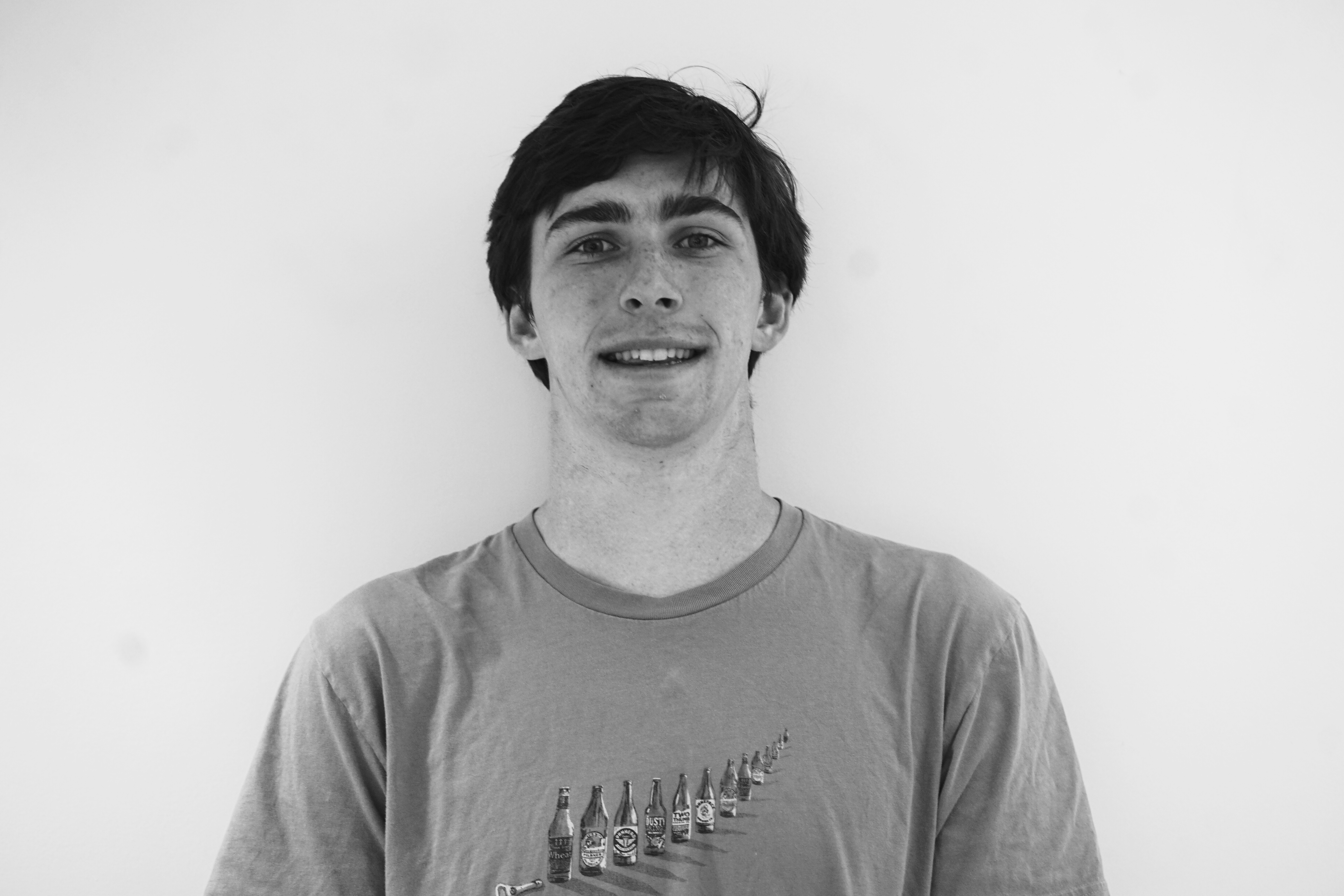

Via Community News Service, a University of Vermont journalism internship for the White River Valley Herald
RANDOLPH – Norbert Ender, who recently opened Speaking Volumes, a vintage goods store in Randolph, sees second-hand shops as an antidote to American consumerist culture.
Originally hailing from Austria, Ender moved to New York in 1986. He relocated to Vermont in 2000 with hopes of providing his children with a quality education. In 2005, Ender opened a used bookstore in downtown Burlington, which he has since sold. Shortly after that he opened a record repair shop, also in Burlington.
Last spring, Ender opened a third location of Speaking Volumes in Randolph. The store has a vast selection of books, vinyl records, clothing, antiques, and arts and crafts.
Q. Do shops like yours exist in places like Austria?
A. Not like this. [In Austria], we hold on to our stuff a little bit more tightly. I’m just astonished by the stuff that’s being disposed of on a daily basis [in the United States]. . . This is a consumer society which has always irked me. It’s wasteful. Nothing’s built to last anymore.
Q. Do you think these large companies are wasteful on purpose?
A. Oh, absolutely. Not just with electronics, with everything. For most things, unless you pay the extra premium [it falls apart].
Q. Where do [your records and books] come from?
A. I have my sources … I am fairly well known in my field. I always collected books. I included my personal collection when I started my shop which was like 12,000 books.
Q. Are there any books or records that you have that you would never sell that are just too valuable to you?
A. Nope. Couldn’t care less. I’ve set it up this way not necessarily for me, but for the community … I have the privilege to kind of determine what’s pertinent, what’s still relevant, what’s going to be maybe relevant again. And I think I’m pretty good at it.
Q. If you find it isn’t worth trying to sell some item, what do you do with it?
A. We put a community shelf out, with all of the Romance and Western [books] … We maintain a bookshelf at the BTV airport that we give out for free to travelers.
Q. How would you say that the uptick in online services such as Kindle or Spotify has affected your business model?
A. It certainly has an effect on it, but the core of book collecting is never going to go away … I have enough readers here in Randolph to make me feel comfortable opening this bookshop.
Q. Do you share the same love of music as you do for books?
A. I was in the book business, back in the ’90s when I really dug into [music], a lot of vinyl was available and discarded that nobody wanted [at that time] … I used to have an extensive record collection. I think I had like 500 to 600 records by the Beatles.
Q. Wow. I didn’t know you could have that many! Is it not wasteful to have that many of the same record?
A. No. But for me keeping them out of the garbage is important. They would have ended up in the dumpster.
Q. Okay, a little bit more about the community here in Vermont: What would you say that the role of your shop and shops like yours has in creating the broader, Vermont community that you have seemed to fall in love with over the past 20 years or so?
A. There used to be these community shops, these country stores, in every little village. They held — and still hold — a very important community function.
Anybody walks in and there seems to be sort of a natural familiarity amongst people. You can pretty much approach anybody in the Northeast. They may not be as friendly, but they’ll be very nice.
Q. What makes you happiest about what you do and what do you hope people remember about your work?
A. [The community] recognizes me as a facilitator for keeping our things in circulation, reducing our waste, and helping us enjoy the stuff that’s [high] quality … [My store] is our collective memory, this is our collective history. We have a responsibility to maintain that.